Why do things fall down and not up? Why do the planets circle the Sun? A quiet, curious man named Isaac Newton figured out the rules behind it all — and became one of the greatest scientists who ever lived.
Quick facts
- Born
- 1643, Lincolnshire, England
- Died
- 1727
- Famous for
- Gravity, the three laws of motion, and the study of light
- Big book
- The "Principia" — one of the most important science books ever
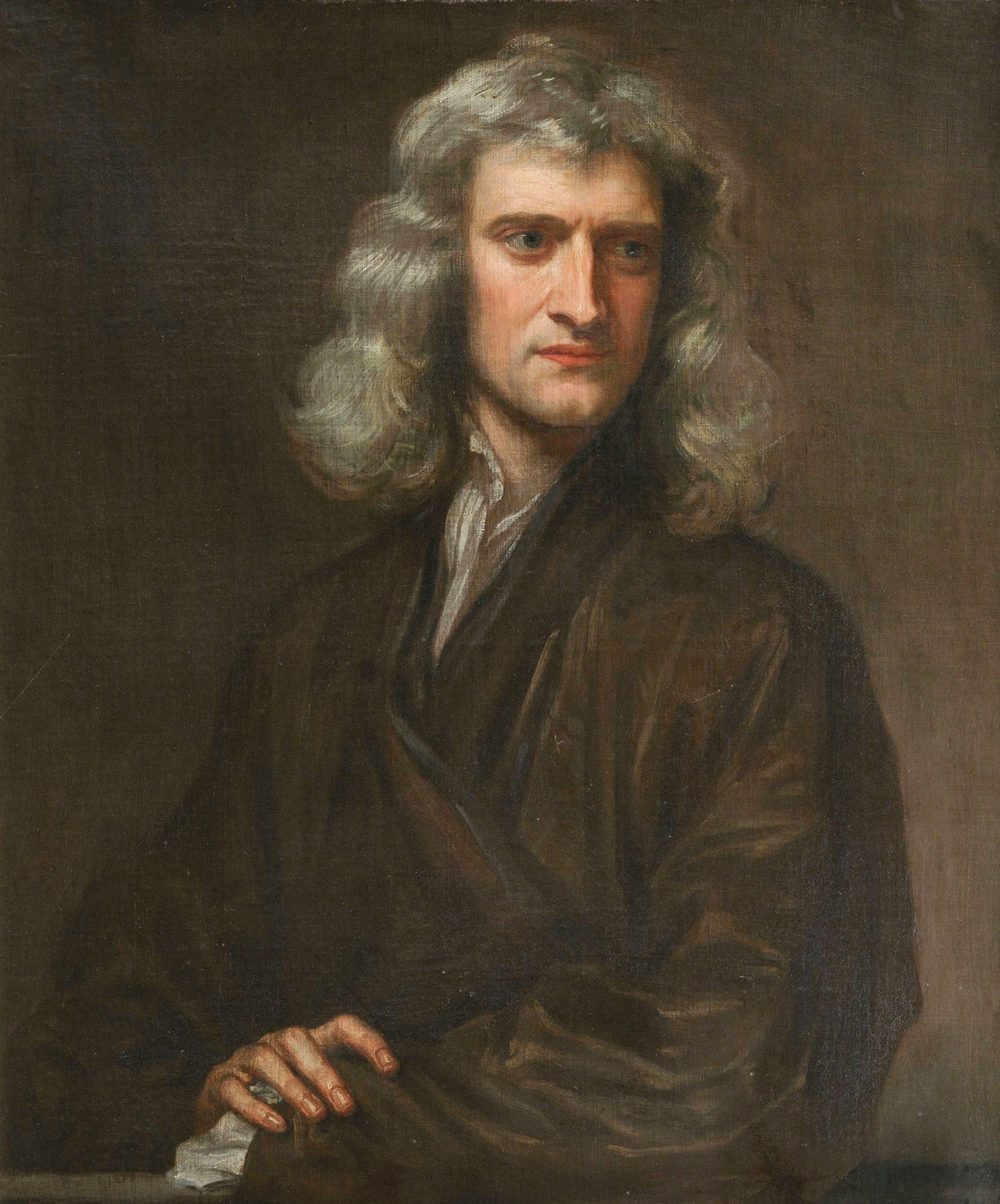 🖼️ Photo coming soon
The famous apple
The story goes that young Newton was sitting under a tree when an apple fell and bonked the ground. Instead of just eating it, he wondered: why does it always fall straight down? That question led him to the idea of gravity — an invisible pull that draws objects toward each other, and keeps us on the ground and the Moon circling the Earth.
The three laws of motion
Newton wrote down three simple rules that explain how everything moves — from a rolling ball to a rocket:
- 1. Things stay still, or keep moving, unless a push or pull changes them.
- 2. The harder you push something, the faster it speeds up (and heavy things need a bigger push).
- 3. Every push has an equal push back — that's how rockets and even jumping work!
Catching a rainbow
Newton also played with light. He shone sunlight through a glass prism and discovered that plain white light is secretly made of all the colours of the rainbow mixed together. 🌈
"If I have seen further it is by standing on the shoulders of giants." — Isaac Newton
Why we remember him
Newton's rules are still used today to build bridges, fly planes, and send spacecraft to other planets. He showed that the universe follows patterns we can understand — if we stay curious enough to ask "why?"