Marie Curie loved science so much that she worked in a cold, leaky shed, stirring boiling pots for years — just to discover something nobody had ever seen. She became the first woman to win a Nobel Prize, and the only person ever to win two Nobel Prizes in two different sciences!
Quick facts
- Born
- 7 November 1867, Warsaw, Poland
- Died
- 4 July 1934, France
- Famous for
- Discovering radium & polonium, and studying radioactivity
- Big prizes
- Nobel Prize in Physics (1903) and Chemistry (1911)
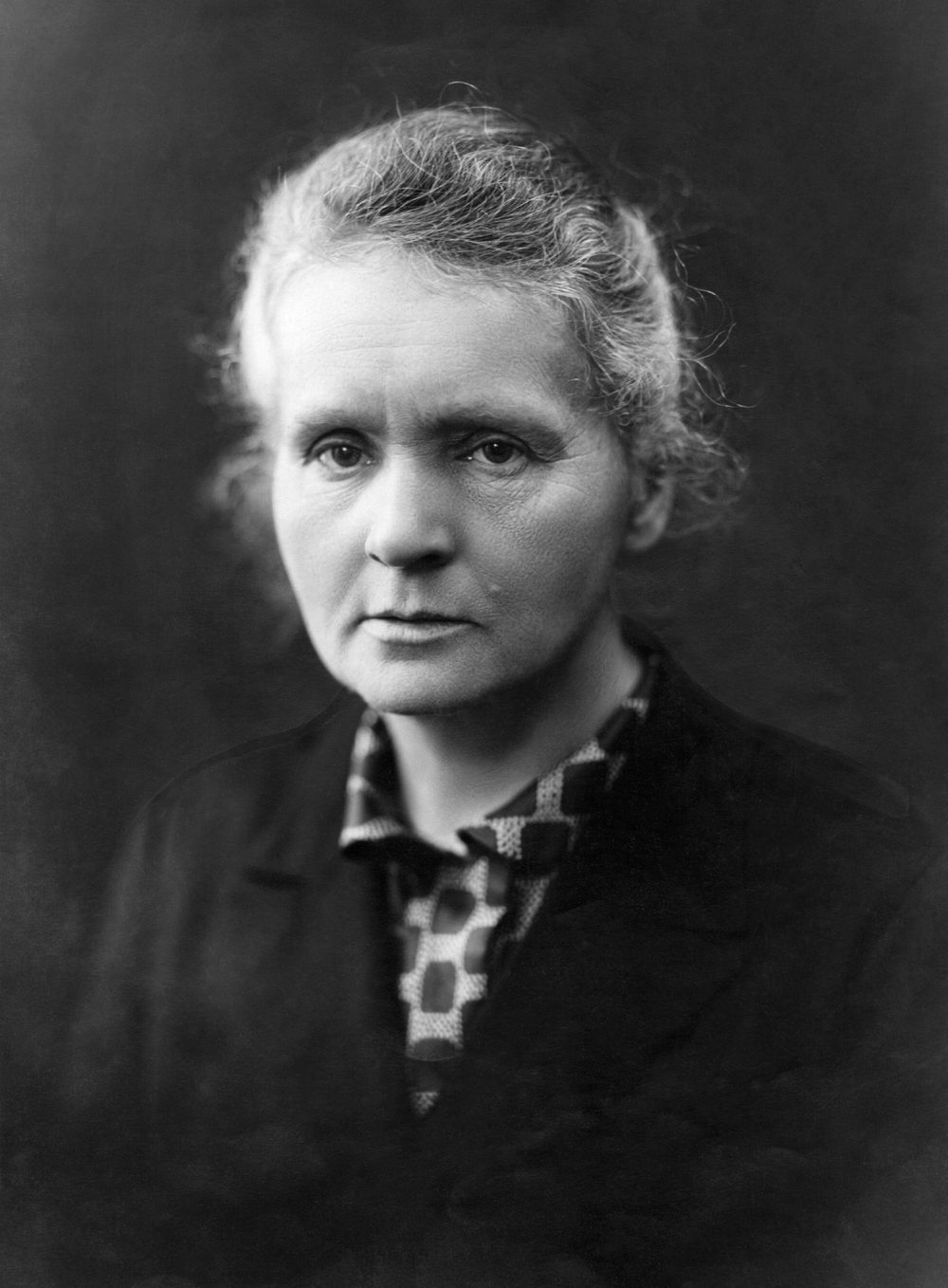 🖼️ Photo coming soon
A girl who loved to learn
Marie was born Maria Skłodowska in Poland. Back then, girls there were not allowed to go to university, so she studied in secret and saved up to move to Paris. She was often cold and hungry as a student, but she was top of her class — because she loved learning.
The mystery of glowing rocks
Marie became fascinated by certain rocks that gave off invisible rays. With her husband Pierre Curie, she studied them and gave this strange power a name: radioactivity. After years of hard work, the Curies discovered two brand-new elements: polonium (named after her home, Poland) and radium, which glowed in the dark!
Two Nobel Prizes!
In 1903 Marie won the Nobel Prize in Physics — the first woman ever to win a Nobel. Then in 1911 she won the Nobel Prize in Chemistry, too. To this day, she is the only person to win Nobel Prizes in two different sciences.
"Nothing in life is to be feared, it is only to be understood." — Marie Curie
A hero in war
During World War I, Marie built mobile X-ray vans — people called them "Little Curies" — and drove to the battlefields to help doctors see inside wounded soldiers and save lives. She trained women to use them, too.
Why we remember her
Marie Curie's discoveries help doctors treat illnesses like cancer today. Sadly, scientists back then didn't know the rays could be harmful, and her work made her ill. But she never stopped being curious or brave. She showed the whole world that girls can be great scientists — and her daughter Irène grew up to win a Nobel Prize as well!