Thomas Edison made over a thousand inventions — but his greatest power was that he never, ever gave up. When something didn't work, he tried again… and again… and again, until the whole world lit up.
Quick facts
- Born
- 11 February 1847, Milan, Ohio, USA
- Died
- 18 October 1931
- Famous for
- The practical electric light bulb and the phonograph
- Nickname
- "The Wizard of Menlo Park"
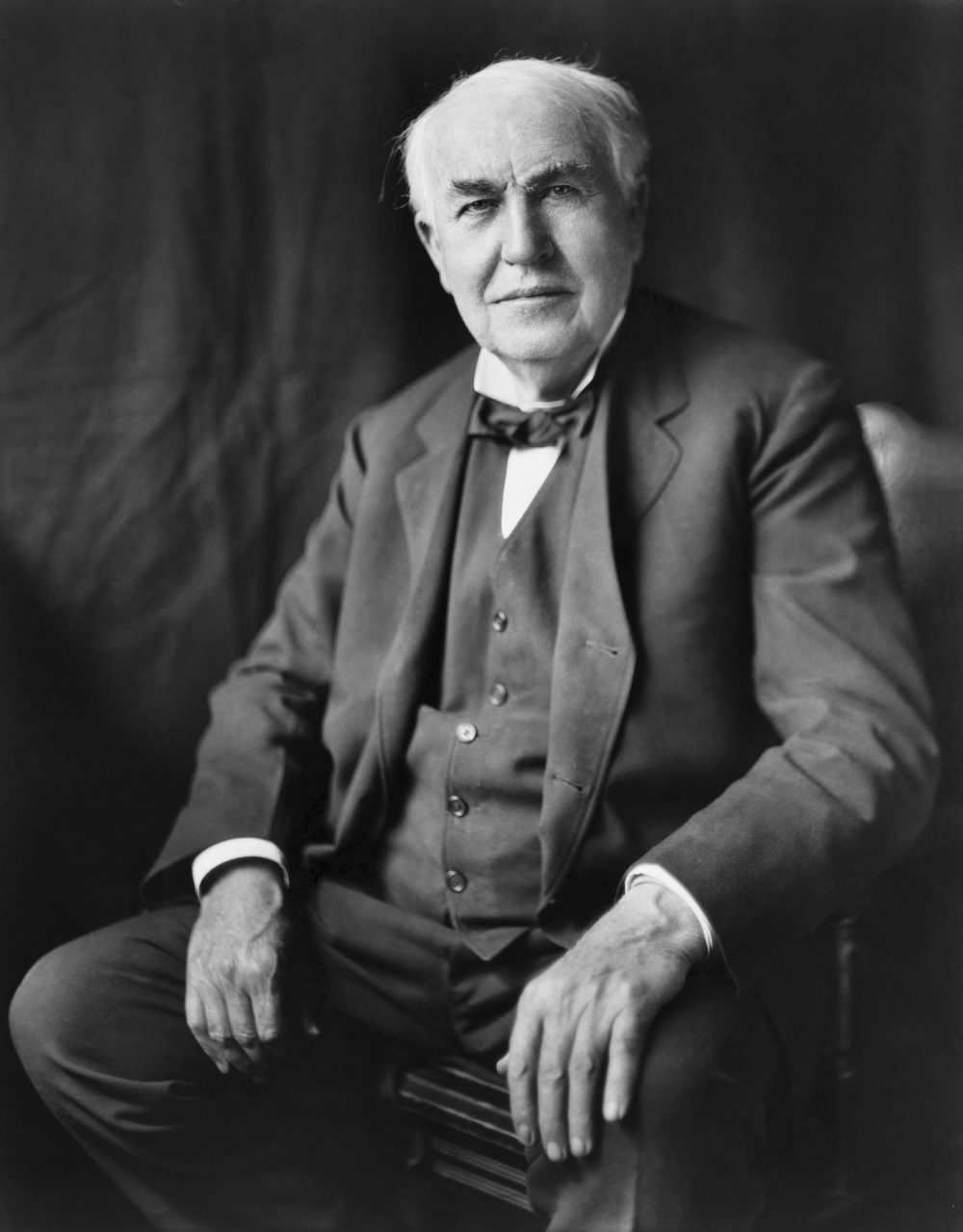 🖼️ Photo coming soon
A very curious child
Young Thomas asked SO many questions that he wore out his teachers, so his mother taught him at home. He loved experiments and reading. He was partly deaf, but he said that even helped him concentrate. As a boy he sold newspapers and snacks on trains — and did chemistry experiments in the baggage car!
The invention factory
Edison built a special laboratory in Menlo Park, New Jersey — one of the first "invention factories," where a team worked together to create new things. People started calling him the "Wizard of Menlo Park."
His big inventions
- The phonograph (1877): the first machine that could record and play back sound. People were astonished to hear a voice come out of a machine!
- The electric light bulb (1879): others had tried, but Edison made a bulb that was practical and long-lasting — and built the power systems to light up streets and homes.
- Movie cameras: his team also helped invent machines for making and showing moving pictures.
Try, try, try again
To make the light bulb work, Edison tested thousands of materials for the glowing part inside. When someone asked about all his failures, he smiled and said:
"I have not failed. I've just found 10,000 ways that won't work."
He also said genius is "one percent inspiration and ninety-nine percent perspiration" — meaning hard work matters most.
Why we remember him
Almost every time you switch on a light or listen to recorded music, you're enjoying ideas Edison helped create. He teaches us that mistakes aren't the end — they're just steps on the way to something amazing.