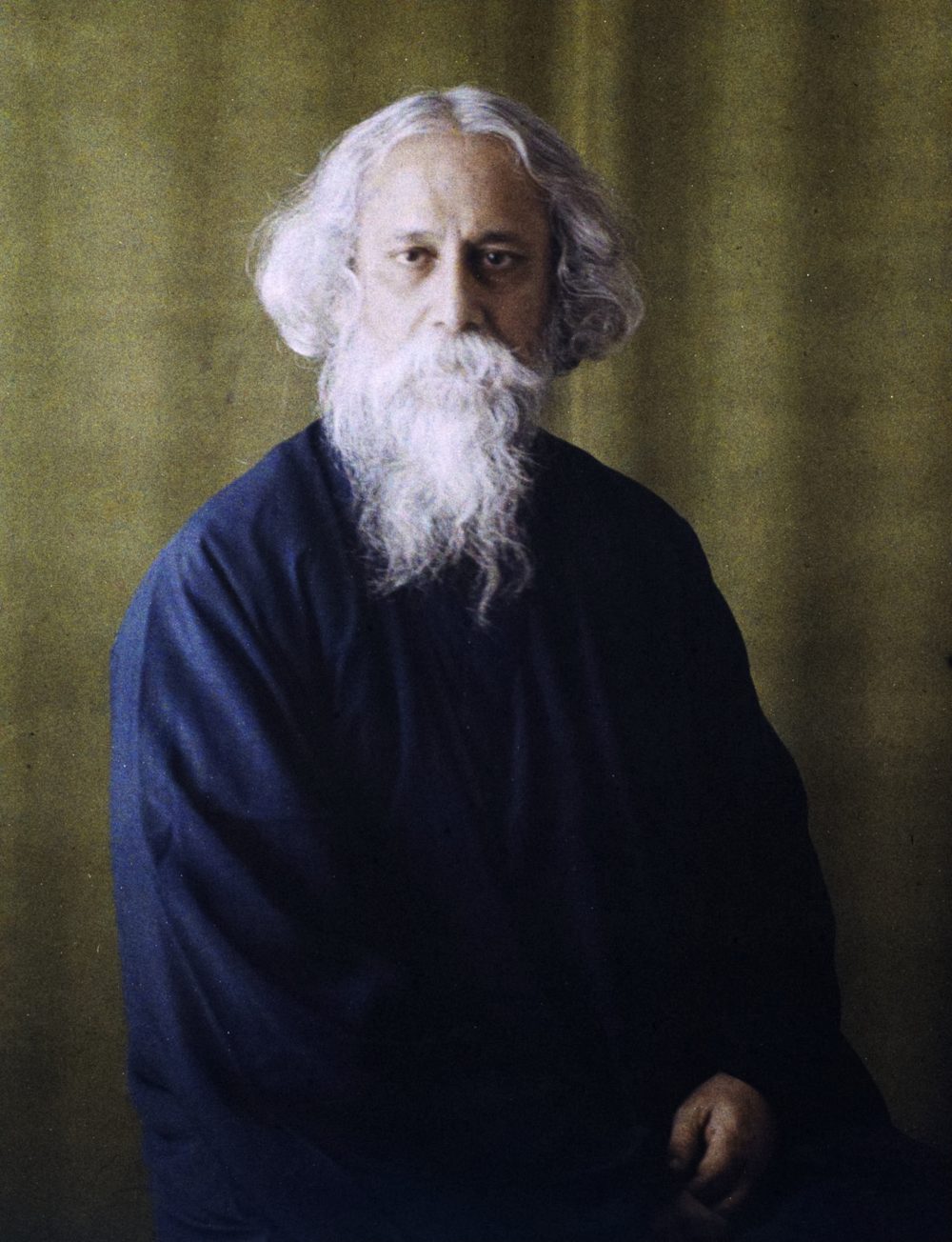
Imagine one person who was a great poet, a songwriter of over two thousand songs, a novelist, a painter, a teacher, and a thinker who cared deeply about poor villages — all at once. That was Rabindranath Tagore, one of the most amazing people India has ever given the world.
Quick facts
- Born
- 7 May 1861, Jorasanko, Calcutta (now Kolkata), India
- Died
- 7 August 1941, Kolkata
- Famous for
- Poetry, songs (Rabindra Sangeet), novels, paintings, and a new kind of school
- Big prize
- Nobel Prize in Literature, 1913 — the first Asian to win it
- Nickname
- "Gurudev" (beloved teacher)
 🖼️ Photo coming soon
A boy in a house full of art
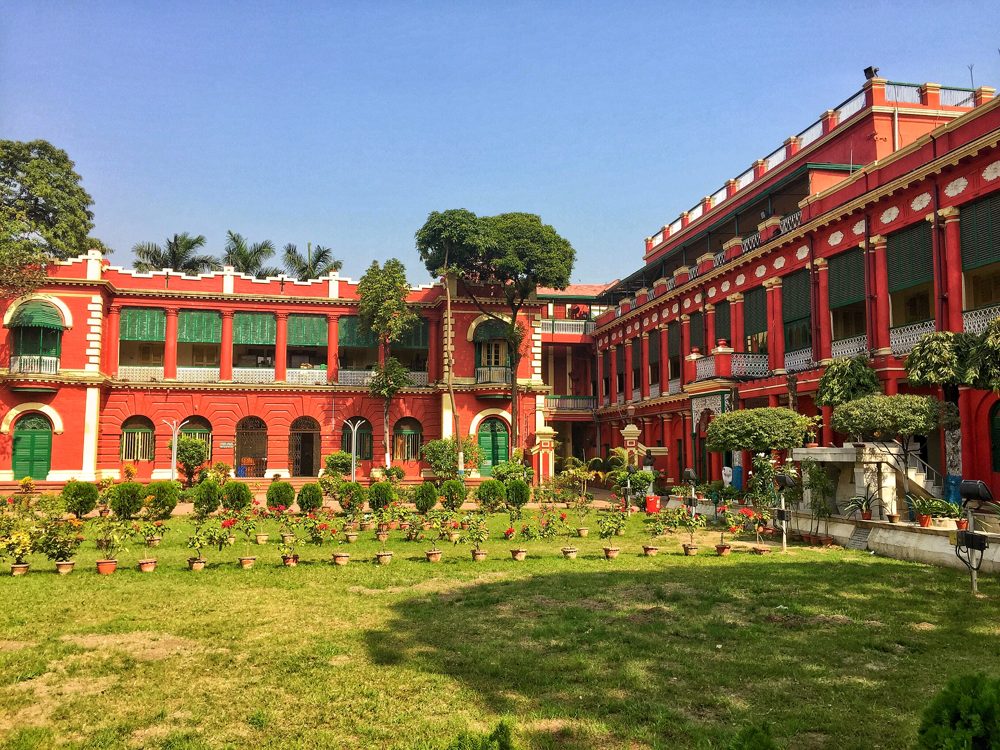
Rabindranath was the youngest of many children in the famous Tagore family, who lived in a grand mansion called Jorasanko Thakur Bari in Calcutta. The house was always buzzing with music, painting, plays, and big ideas. Young Rabindranath didn't enjoy ordinary school — he found it boring! He learned far more from books, nature, and the artists all around him. He wrote his first poems when he was just a child.
 🖼️ Photo coming soon
The houses that shaped him
Tagore lived and worked in several special places, and each one changed his ideas.
🏛️ Jorasanko (Kolkata)
His birthplace and family home — full of culture. Today it is a museum and part of Rabindra Bharati University.
🚣 Shilaidaha (now in Bangladesh)
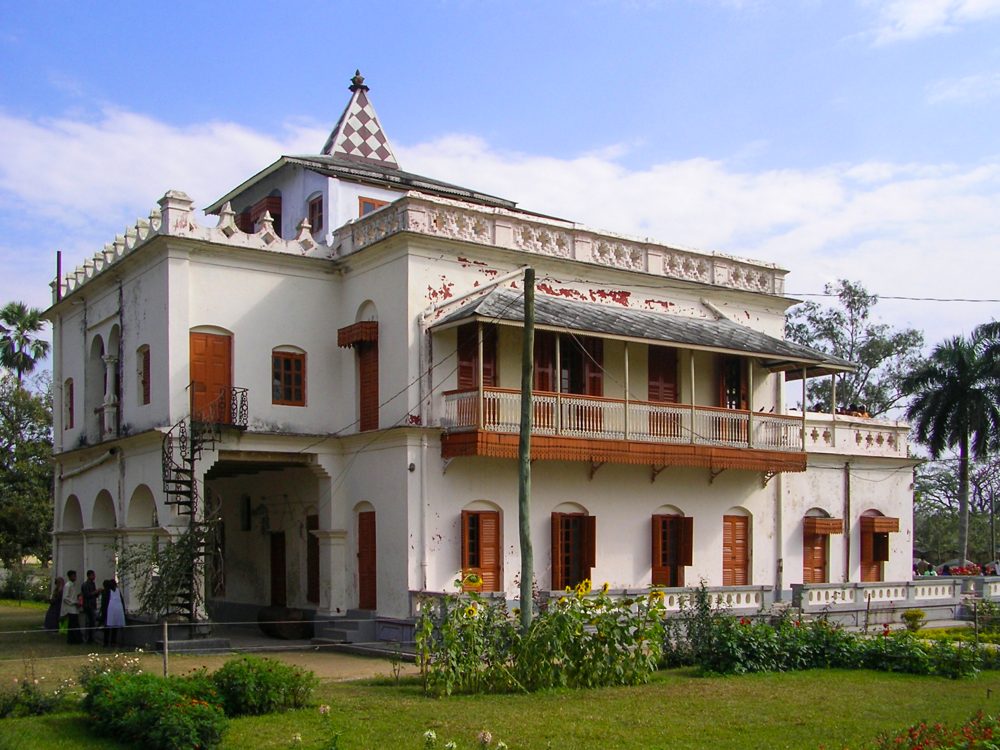
As a young man, Tagore managed his family's farmlands along the great Padma River. He often lived on a houseboat and in a riverside house called the Kuthibari. Meeting ordinary farmers and seeing their hard lives filled his heart — and his poems. Much of his most beautiful writing came from these quiet river days.
 🖼️ Photo coming soon
🌳 Santiniketan (Bolpur, West Bengal)
This became the great work of his life. The name means "abode of peace." Here he built houses with lovely names like Udayana and Shyamali, and — most importantly — a brand-new kind of school.
A school under the trees
Tagore believed children learn best with freedom, nature, music, and art — not by sitting still and memorising. In 1901 he started a small school at Santiniketan where classes were held outdoors, under the trees. In 1921 it grew into a famous university called Visva-Bharati, where students from all over the world could learn together. Its motto means: "where the whole world meets in one nest."
 🖼️ Photo coming soon
The 1913 Nobel Prize 🏅
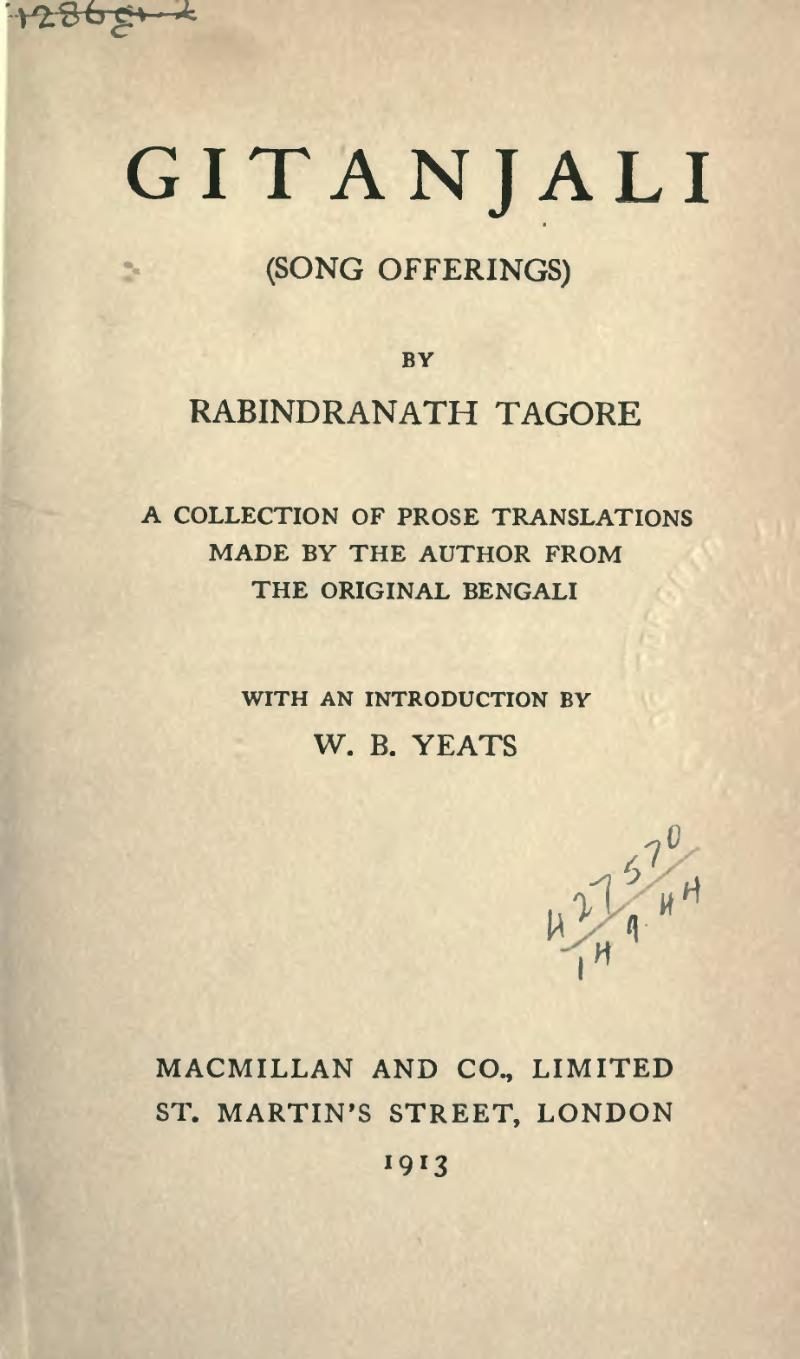
Tagore translated some of his Bengali poems into English in a small book called Gitanjali ("Song Offerings"). When famous writers in Europe read it, they were amazed by its beauty and gentleness. In 1913, Tagore won the Nobel Prize in Literature — becoming the first Asian person ever to win a Nobel Prize. Suddenly the whole world wanted to read the poet from India.
 🖼️ Photo coming soon
So many kinds of art
- Poems: thousands of them, like Gitanjali, Sonar Tari and Balaka.
- Songs: over 2,000 songs called Rabindra Sangeet — still sung and loved today.
- Novels & stories: Gora, The Home and the World, and the gentle short story Kabuliwala.
- Plays: like The Post Office (Dak Ghar).
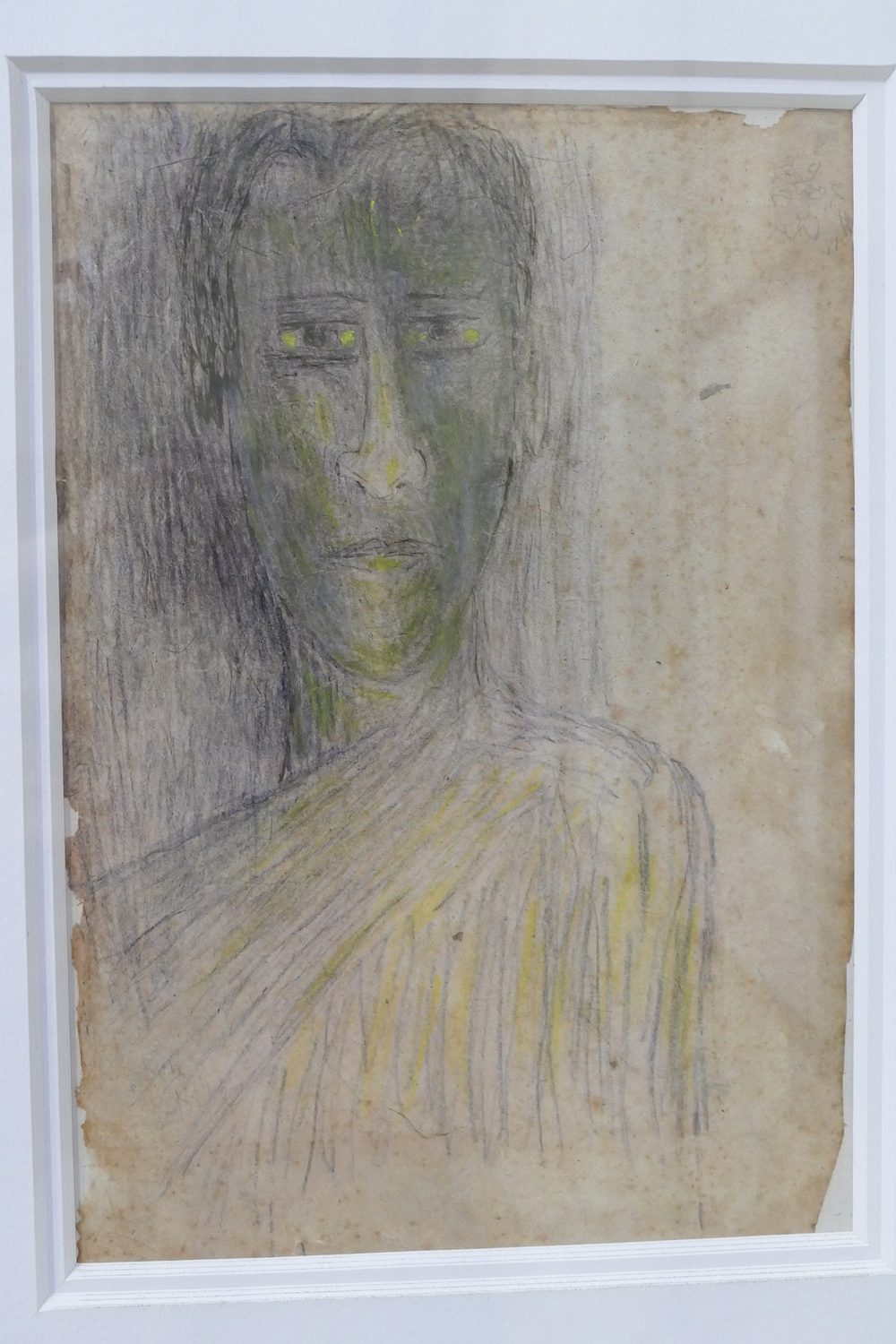
- Paintings: he started painting seriously around age 60 and made over 2,000 colourful, dreamy artworks!
 🖼️ Photo coming soon
Helping villages: his "economics" of self-reliance
Tagore didn't just write — he acted. After seeing how poor the villages were, he set up the Institute of Rural Reconstruction at Sriniketan, near Santiniketan. The big idea was self-reliance: helping villagers help themselves. He started cooperatives (where people pool money and work together), a small cooperative bank to lend tiny loans, better farming methods, health care, and training in crafts. He even sent his son to study agriculture in America to bring back new ideas. These thoughts — cooperatives, tiny loans, and village self-help — are still important in how the world thinks about helping rural communities today.
Songs for whole nations
Tagore's words became the national anthems of two countries: "Jana Gana Mana" for India and "Amar Sonar Bangla" for Bangladesh. The national anthem of Sri Lanka was also inspired by him. Not many people in history can say their poems are sung by entire nations!
Standing up for India
Tagore loved India deeply and wanted it to be free and proud. In 1915 the British gave him a special honour called a knighthood. But in 1919, after the terrible Jallianwala Bagh massacre in Amritsar — where British soldiers killed many peaceful Indians — Tagore was heartbroken and angry. He gave back the knighthood in protest. It was a brave act that the whole country noticed. He believed in freedom, but also in kindness, education, and friendship between all peoples — and he and Mahatma Gandhi were great (if sometimes debating) friends.
"Where the mind is without fear and the head is held high… into that heaven of freedom, my Father, let my country awake." — from Gitanjali
A meeting of two great minds
In 1930, Tagore even sat down with the scientist Albert Einstein for a famous conversation about science, beauty, and truth — the poet and the physicist, swapping big ideas! (Read about Einstein here →)
Why we still remember him
Rabindranath Tagore showed that one person can be a poet and a painter and a teacher and a helper of the poor. He taught that learning should be joyful, that art belongs to everyone, and that all the people of the world are one big family. That is why, more than 80 years after he passed away in 1941, his songs are still sung, his school still teaches, and his words still give people courage.